Why You Should
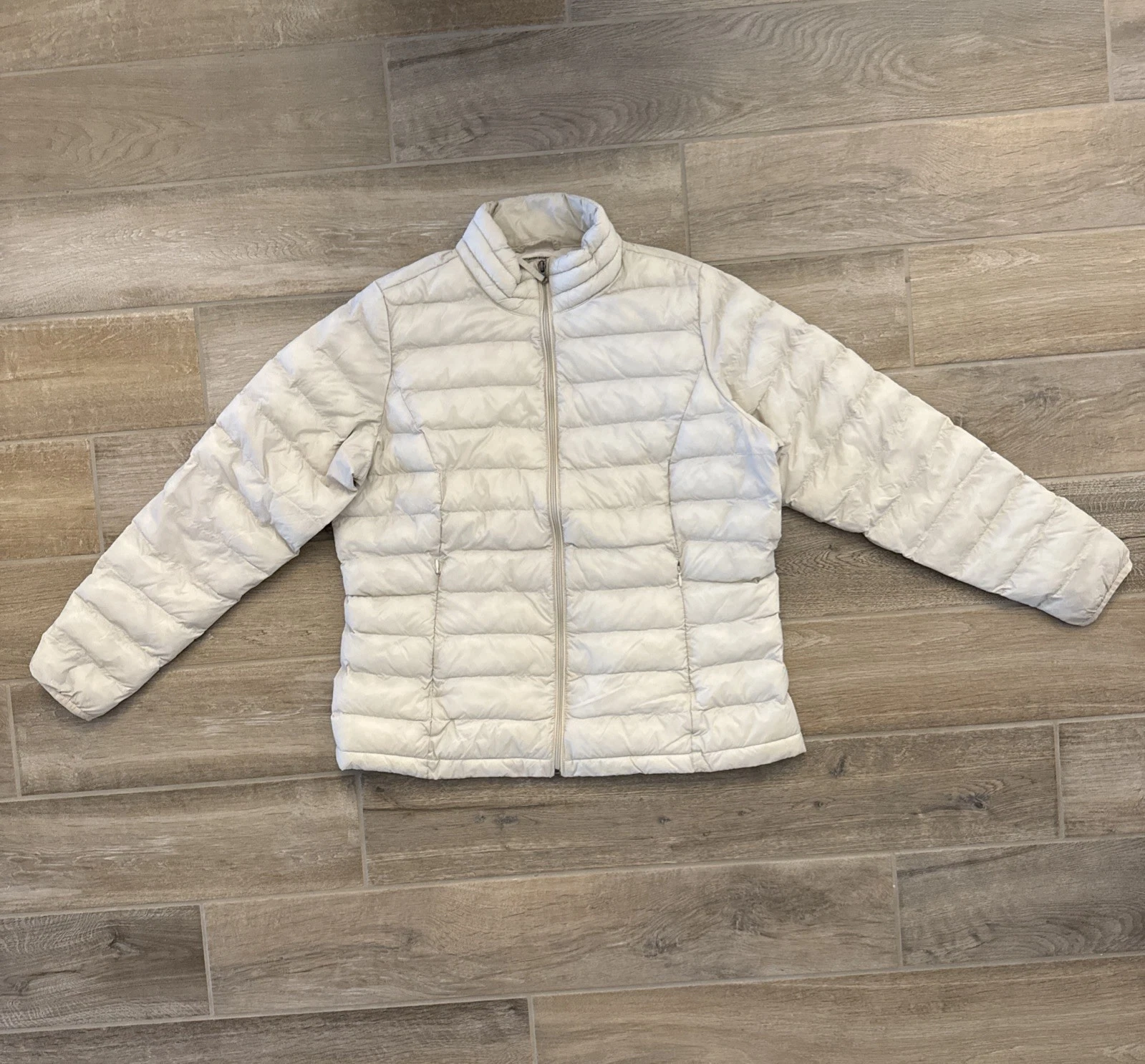
Amazon Essentials Packable Puffer Jacket Review 2025
Introduction
The Amazon Essentials Women's Lightweight Water-Resistant Packable Puffer Jacket sits in a crowded corner of the market: budget outerwear that promises the aesthetic and utility of a premium puffer at a fraction of the cost. At $35–$55, it's positioned squarely against fast-fashion puffers from H&M and Old Navy, while quietly asking to be compared to the likes of Patagonia and The North Face by buyers who are drawn in by the silhouette.
It won't beat those brands. But that's not the right question to ask.
The right question is whether this jacket earns its price and delivers on its specific promises — packability, light water resistance, everyday warmth. Based on buyer data and evaluation across its intended use cases, the answer is yes, with specific caveats that will determine whether you are the right buyer.
This review breaks down everything you need to know before purchasing.
Price
The Amazon Essentials puffer retails between $35 and $55 depending on color, size, and fluctuating Amazon pricing. Extended and plus sizes occasionally land at the higher end of that range, though the price differential is typically small. Sales and promotional discounts through Amazon's event windows — Prime Day, Black Friday — can push it below $35.
At this price point, you are not paying for premium fill power, technical construction, or branded hardware. You are paying for a functional, casual jacket that does not require you to make a significant financial commitment. For buyers who want a lightweight layer for travel, commuting, or mild weather without risking a $200+ investment on a jacket they'll treat casually, the price is genuinely appropriate.
For context: Patagonia's comparable packable puffers start at $149. The North Face's ThermoBall Eco Jacket sits around $199. Even mid-tier options from Columbia typically run $80–$120. Judged against those numbers, the value-to-function ratio is strong for its intended use case.
Materials and Construction
Shell: 100% polyester
Lining: 100% polyester
Fill: 100% polyester (synthetic)
Every layer of this jacket is polyester, which is worth stating plainly. There is no down, no recycled fill with a technical specification, no ripstop nylon shell. Synthetic fill is not inherently inferior to down — it retains warmth when wet, which down does not — but synthetic fill at this price point is not high-loft, high-warmth synthetic fill. It's a budget batting that performs adequately in transitional temperatures (roughly 40°F–55°F / 4°C–13°C) and falls short when conditions get genuinely cold.
The shell fabric is noticeably thin. Multiple buyers describe it as feeling light in the hand, and it produces a visible, audible rustle during movement that confirms the fabric weight is minimal. For a packable jacket, thinness is partly by design — you can't compress a thick shell — but it has consequences for long-term durability.
Water resistance is a DWR (durable water repellent) coating applied to the shell polyester, standard at this price. It handles light rain and drizzle adequately. Extended or heavy rain will overwhelm it. This is not a waterproof jacket and is not marketed as one.
Zipper quality is the construction element most consistently flagged by buyers, and the concerns are legitimate. The front zipper has been reported to snag, stiffen, and fail under moderate use. This is a common failure point in sub-$60 outerwear where hardware savings are passed to the buyer as risk.
Baffle stitching — the quilted channels that hold fill in place — is functional when new, but several buyers report seam separation and fill migration after repeated use and washing, which creates uneven insulation pockets over time. Washing instructions should be followed carefully to slow this process.
Comfort
The lightweight construction means you're not fighting the garment when you move — it layers cleanly under a heavier shell or over a midlayer without creating the stiff, restrictive feel of a heavier coat.
The synthetic fill is lofted enough to feel substantial without creating a stiff, bulky silhouette. For temperatures between roughly 40°F and 55°F (4°C–13°C), it provides adequate insulation as a standalone layer. Below 40°F, it functions better as a midlayer beneath a wind shell or heavier coat than as a primary outer layer.
The interior lining is smooth polyester, which means it slides easily over long sleeves and thinner base layers — a practical detail for women who commute or layer daily. It doesn't cling or pull.
The packable design compresses into its own pocket (or a small stuff sack, depending on the version), making it genuinely useful for bag carry. Buyers who use it for travel — as a carry-on layer, an airplane jacket, a bag-stored option for unpredictable weather — report consistently high satisfaction because it solves a specific problem without taking up significant luggage space.
The shell rustling is a comfort consideration worth naming: if noise during movement is something you find distracting or if you're in quiet professional environments, it's noticeable. It's not extreme, but it's present.
Fit and Sizing
Sizing runs slightly small to true-to-size. Buyers who want a relaxed fit or who plan to layer a sweatshirt, fleece, or chunky knit underneath consistently recommend sizing up one size. This is especially relevant for buyers between standard sizes.
The jacket's silhouette is designed to be somewhat fitted through the body, which works well for a slim base layer but compresses quickly when you add volume beneath it. If you're purchasing this as a midlayer — which is its most effective use case — sizing up is not optional, it's necessary.
Extended and plus sizes are available, which is a genuine advantage of Amazon Essentials as a brand. The size range is broader than many comparable budget puffers, and buyers in plus sizes report that the proportions — pocket placement, sleeve length, body length — translate reasonably well across sizes rather than simply being scaled up versions of a straight-size cut.
Practical guidance: If you wear a medium in most brands and plan to layer, order a large. If you wear a medium and plan to wear it over a thin base layer only, true-to-size will likely work.
How to Style It
1. The Urban Commuter Layer
Wear it over a ribbed turtleneck, straight-leg dark jeans, and ankle boots. Choose a neutral puffer color — black, navy, olive — and let the jacket function as the outermost layer for the morning commute in 45°F–55°F weather. Add a structured tote or leather crossbody. The jacket's slim-when-zipped profile works with tailored bottoms; avoid pairing it with overly voluminous trousers unless you're intentionally going for a contrast silhouette.
2. The Packable Travel Layer
Pair it with slim travel pants (ponte or stretch twill), a fitted long-sleeve merino top, and clean white sneakers or low-profile loafers. Compress the jacket into its own pocket and stow it in your carry-on for the flight. Pull it out when you land and hit unpredictable weather. This is the jacket's single best use case, and styling it simply — no statement accessories, clean lines — lets the practicality lead.
3. The Budget Ski-Base Layer
Wear it zipped under a waterproof ski jacket or heavier technical shell as an insulating midlayer. Style is secondary here, but if you're at a mountain town doing après-ski, wear it open over a thermal base layer and fitted ski pants with lug-sole boots. The puffer silhouette reads outdoor-appropriate without requiring an expensive technical piece for moderate-cold activities.
Alternatives
1. Columbia Women's Heavenly Long Hooded Jacket ($100–$130)
If you need meaningfully more warmth and are willing to spend more, Columbia's Heavenly uses Omni-Heat thermal reflective lining with synthetic insulation rated for genuine cold-weather use. It's not packable to the same degree, but it performs in temperatures where the Amazon Essentials jacket will leave you underdressed. Better zipper hardware and a longer cut for additional coverage.
2. Old Navy Lightweight Packable Frost-Free Jacket ($55–$75)
The closest true budget competitor. Similar polyester construction, comparable weight, and similar warmth limitations. The Old Navy version often has slightly better zipper quality and is available in-store for those who want to assess fit before buying. Sizing tends to be more generous. Worth trying if you want a physical try-on before committing.
3. Patagonia Women's Nano Puff Jacket ($199)
Included not as a direct comparison but as a clear upgrade path. If after one season with the Amazon Essentials jacket you find yourself reaching for it constantly and wishing it were warmer, more durable, and quieter in movement, the Nano Puff is where to go. It uses PrimaLoft Gold insulation, a more durable shell, and DWR that holds up through washing far better than budget polyester coatings. The price difference is significant, but the performance gap justifies it for frequent, demanding use.
Pros
- **Packability is genuinely useful.** The jacket compresses into its own pocket and fits easily into a tote, backpack, or carry-on. This is not a marketing claim — it's a functional design detail that buyers use repeatedly.
- **Water resistance handles light weather adequately.** Light rain and drizzle are managed well. For urban use — caught in a shower, walking to the car — the DWR shell performs as expected.
- **Strong price-to-function ratio within its intended use case.** For 40°F–55°F casual wear and layering, this jacket competes with pieces priced two to three times higher.
- **Wide size range including plus sizes.** Sizing extends through plus, with proportions that are more thoughtfully scaled than many budget competitors, making it accessible for a broader range of buyers.
- **Color accuracy is reliable.** Product images reflect actual colors accurately. Buyers report minimal discrepancy between what they ordered and what arrived — a meaningful detail when purchasing outerwear online without a try-on.
- **Lightweight enough to layer without bulk.** Worn under a heavier shell, it adds warmth without creating a stiff or restrictive silhouette.
Cons
- **Insufficient warmth as a standalone coat below 40°F.** This is the most consequential limitation. Buyers expecting a winter jacket are repeatedly disappointed. The fill power and shell weight are genuinely insufficient for true winter conditions.
- **Fill migration after washing degrades performance.** Clumping and uneven fill distribution after laundering is a documented and recurring issue. Even with careful washing and proper drying (low heat, dryer balls), fill shifting reduces insulation efficiency over time.
- **Zipper quality is a liability.** Reports of snagging, stiffness, and outright failure are too consistent to dismiss. The front zipper is the jacket's most vulnerable component and the most likely point of early failure.
- **Shell fabric is audibly thin.** The polyester shell produces noticeable rustling during normal movement. It's not a dealbreaker for most casual use, but it signals the material economy clearly and wears on some buyers quickly.
- **Baffle stitching is not built for longevity.** Seam separation after repeated use or washing has been reported by multiple buyers. This limits the jacket's realistic lifespan compared to higher-quality puffers with more secure construction.
- **Online-only availability means you cannot try it before purchasing.** Fit is tricky enough — slightly small, layering-dependent — that the lack of in-store access adds friction, particularly for first-time buyers unsure of sizing.
Who Should Buy This
Who Should NOT Buy This
Current Price
$35–$55
Available at Amazon.com
Buy It Now →Price verified as of May 4, 2026. WYS may earn a commission on purchases.
The WYS Verdict
The Amazon Essentials Women's Packable Puffer Jacket is a competent budget layer that performs well within its actual limitations and poorly outside of them. At $35–$55, it is correctly priced for what it is: a casual, packable, lightly insulated jacket suited to mild cold, travel, and midlayer use. The zipper is its most likely early failure point, and the construction is not designed to last five years of hard use.
If you buy it understanding exactly what it is — a lightweight, packable shell for 40°F-plus weather, ideal as a travel layer or a midlayer beneath something heavier — it delivers that use case reliably.
The buyers who get burned are the ones who ask it to be something it isn't. The buyers who get real value are the ones who match their expectations to the product.
Rating: 3.5 out of 5 — Highly effective within a narrow, specific use case.
Prices accurate as of publication date. Always verify current pricing and availability on the retailer's website.