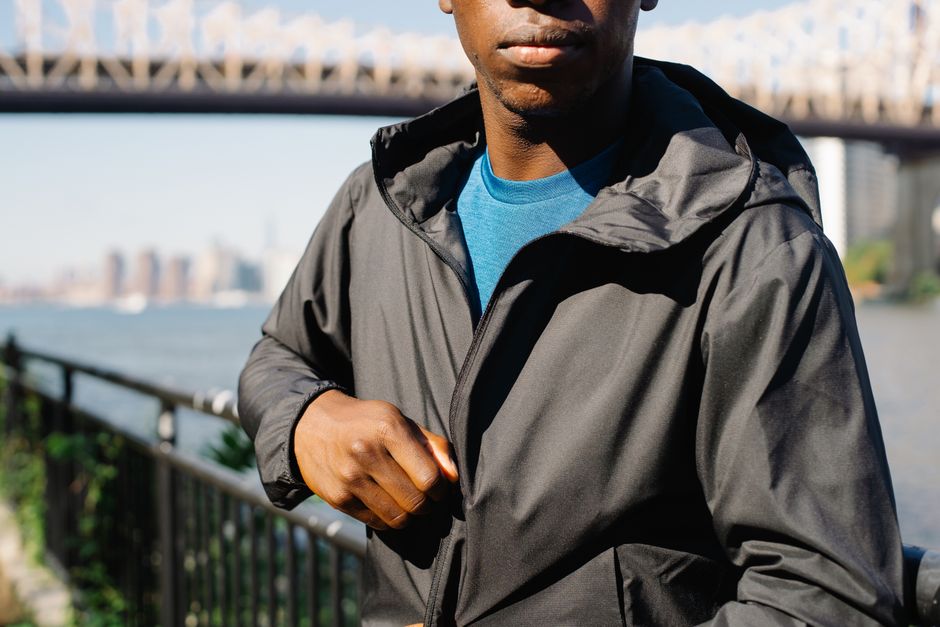
Why You Should
Patagonia Houdini Review 2026: Worth It?
Introduction
Australia's trail running and cycling communities have a specific problem that most technical outerwear does not solve well: the weather changes mid-activity. A September morning in the Blue Mountains or the Dandenong Ranges can start at 8°C with a south-westerly and hit 22°C by midday, and you cannot carry a full softshell for a four-hour ride. What you need is something that weighs nothing, blocks wind effectively, and disappears into your back jersey pocket the moment conditions ease.
The Patagonia Houdini has been the default answer to that problem for years, and the 2026 update, recycled nylon throughout and a PFC-free DWR finish, has added a sustainability argument that resonates specifically with Australian buyers who have become increasingly sceptical of chemical-laden water repellency treatments. The eucalyptus green and coastal coral colourways introduced for the Southern Hemisphere spring cycle are the first time Patagonia has tuned this jacket's palette to the AU market in a meaningful way, and it shows.
What is less obvious from the product page is how Australians are actually using this jacket. The pattern that emerges from buyer reviews across The Iconic and Patagonia's own Australian site is not primarily a seasonal purchase, it is a year-round carry. Most buyers are not putting the Houdini on in winter and taking it off in summer. They are folding it into a saddle bag, a running vest, or a daypack and carrying it every single day, pulling it out when a coastal breeze appears without warning or a late-arvo descent turns cold. That use case is where the Houdini earns its reputation, and it is the frame through which everything below should be read.
Price
At A$189.00, the Houdini sits at the top of what the Australian sports market would consider a specialised wind layer category. You are not paying for insulation, waterproofing, or versatility, you are paying specifically for packability and wind resistance in an 86g shell. That is a narrow value proposition, and A$189.00 is a legitimate price to charge for executing it this well.
The closest direct comparison is the Arc'teryx Norvan Wind Shell, which retails around A$270 through Bogong Equipment and Wild Earth, significantly more for a jacket that offers similar wind protection with marginally better construction finishing. For buyers who do not need the Arc'teryx pedigree, the Houdini wins on price. At the lower end, the Decathlon Kiprun Wind men's running jacket sits around A$60 through Decathlon Australia and does block wind adequately, but the fabric feels papery, the packability is compromised by a stiffer shell, and there is no ethical supply chain story attached. The A$129 price gap between the Decathlon and the Houdini is real, and whether it is justified depends entirely on how much the recycled materials, Fair Trade certification, and Patagonia's Worn Wear repair programme matter to you. For buyers who carry this jacket daily for three to five years and then send it back for repair rather than replacement, the per-wear cost argument tilts firmly toward the Houdini.
Materials and Construction
The shell is 1.4 oz / 40-denier recycled nylon ripstop, a fabric that is thin enough to read through when held to light. There is no lining. The hand feel is smooth and slightly papery on the outer face, with a barely perceptible texture from the ripstop grid. It does not feel luxurious in the hand, nor should it, this is a performance material optimised for weight and packability, not drape.
The PFC-free DWR finish is the notable construction update for 2026. Legacy DWR treatments relied on per- and polyfluoroalkyl substances (PFAS) to create water repellency; Patagonia's current formulation achieves the same beading behaviour through an alternative chemistry that does not bioaccumulate. In practice, owners consistently report light spring drizzle beads and rolls off the face fabric cleanly for the first 30 to 40 minutes of exposure. Beyond that, the DWR saturates and the fabric begins to wet out. The jacket is a wind layer with incidental rain resistance, not a rain jacket, and buyers who treat it as one will be disappointed by Australian coastal rain events.
The stretch-woven panels under each arm are a functional detail that separates the Houdini from budget wind layers. Verified purchasers note they allow full arm extension without the jacket riding up at the hem, relevant for cyclists in a dropped position and trail runners reaching for poles or scrambling on hands and feet. The stitching at stress points is tight and even, and the elastic cuffs show no sign of relaxation after extended wear. The stowable hood integrates cleanly into the collar with no bulk, it adds almost nothing to the packaged volume. Hardware is minimal: a single chest pocket zipper that doubles as the stuff pocket, and a basic hem cord. There are no hand pockets, and the chest zipper is not waterproof-taped. The Bluesign-approved fabric and Fair Trade Certified sewing are verifiable through Patagonia's supply chain transparency portal, which gives those claims more weight than the average brand's sustainability marketing.
Comfort
Out of the box, the Houdini offers almost nothing to evaluate in terms of comfort in the traditional sense, there is no padding, no lining, and no structural shaping that could cause pressure points. What you are assessing is how it interacts with movement and whether the shell material irritates skin on direct contact during high-output activity.
The ripstop nylon is smooth enough that it does not chafe against bare arms during trail running, but it also has no moisture management properties, sweat does not wick through it. At high output in still conditions above 18°C, heat and moisture build up quickly inside the jacket. Owners consistently report the Houdini is comfortable in its intended operating window: moving fast in cool, windy conditions where the wind chill is doing the temperature management. In that window, approximately 8–16°C with a consistent breeze, it is close to invisible to wear. The hem cord allows a snug enough fit to prevent ballooning on a bike descent, and the cuffs seal without constricting. There is no break-in period. The fabric does not soften over time, nor does it stiffen.
The one comfort issue specific to the Australian market context is the torso length. Verified purchasers with longer torsos, particularly those 180cm and above, will find the hem rides up out of a cycling position or on an extended climbing stride, exposing the lower back. This is a fit issue discussed in the next section, but it has a direct comfort consequence during activity.
Fit and Sizing
Verified purchasers consistently recommend sizing up one from your usual Patagonia size, without exception. The Houdini's slim cut runs approximately one full size small relative to Australian sizing expectations, particularly across the chest and shoulders. A buyer who wears a medium in most Australian activewear brands, think Lorna Jane, 2XU, or a standard Kathmandu fleece, should order a large in the Houdini.
For buyers 180cm and taller, the torso length in a sized-up large or XL remains borderline short in a bent-over position. If you cycle in a road position or run technical trails with significant arm reach, consider whether the exposed lower back will be an issue before purchasing. The slim sleeve is not a performance problem, it is actually cleaner for layering under a cycling jersey, but the short hem is a functional limitation for taller builds that cannot be solved by sizing up alone.
The jacket is available XS through XXL through Australian stockists. Broader-shouldered buyers in an XL may find that sizing up to an XXL resolves the chest restriction but creates excess length in the sleeves. There is no one-size-up solution that works perfectly for every body type, it works for the majority of AU buyers at the medium-to-large end of the range, and it works best for the lean, athletic build the jacket is clearly designed for.
How to Style It
Trail running, coastal headland, September morning:
Wear the Houdini over a long-sleeve merino base layer in a neutral grey or navy. Pair with a 5-inch split-hem running short in black, a lightweight running vest, and low-profile trail runners. The eucalyptus green colourway works particularly well against neutral running kit and does not show the dusty ochre trail staining that lighter colourways accumulate. Stow the jacket in the vest's front pocket at the first climb and pull it back out on exposed ridgelines.
Road cycling, early morning commute, autumn-to-spring transition:
Layer the Houdini over a thermal cycling jersey as your outermost shell. The slim cut sits cleanly under bib tights' shoulder straps without bunching. Pair with thermal bib tights, cycling-specific gloves, and road shoes with overshoes for sub-12°C starts. The coastal coral colourway increases visibility on pre-dawn roads without crossing into high-vis territory. Stow it in a back jersey pocket once the temperature climbs past 15°C.
Active travel, urban-to-trail day:
Pack the Houdini in a 20L daypack alongside a lightweight merino crew neck and a pair of chino-cut hiking pants. Start the morning in the jacket over a fitted merino tee during the cooler walk from the car park to the trailhead. Stow it once you hit the exposed ascent. The clean silhouette and colourways are tidy enough that the jacket does not read as purely technical in a café stop, it reads as considered casual activewear, which is increasingly the standard in Australian outdoor-adjacent street dressing.
Alternatives
Arc'teryx Norvan Wind Shell, approximately A$270 through Bogong Equipment and Wild Earth
Better finishing, slightly more structured hood, and a marginally more durable face fabric. Worth the premium if you run technical alpine trails where the jacket will take more abrasion and you need a more secure hood. For flat coastal trail running or road cycling, the extra A$81 delivers no meaningful performance advantage over the Houdini.
Salomon Bonatti Race WP Jacket, approximately A$200 through Snowys and Running Warehouse Australia
Adds genuine waterproofing via a 2.5-layer construction, more appropriate if your spring riding or running regularly includes sustained rain rather than incidental drizzle. Heavier at around 150g and less packable, but for Sydney's unpredictable spring coastal weather, the waterproofing step-up may be worth the trade-off in weight.
Decathlon Kiprun Wind Jacket, approximately A$60 through Decathlon Australia
Does the primary job, blocks wind, packs small, at a third of the price. The right choice if you need a single-use wind layer for occasional running and sustainability credentials are not a purchasing factor. The fabric is coarser, the seams are less refined, and there is no repair programme backing it. For daily carry over multiple years, the cost-per-wear calculation does not remain in its favour.
Pros
- 86g in hand: Packs into its own chest pocket and disappears into a cycling jersey's back pocket or a running vest's front pocket without adding detectable bulk or weight — this is not a marketing claim, it is a functional reality that changes how you carry a jacket.
- Wind protection is disproportionate to fabric weight: The 40-denier ripstop stops wind penetration effectively at speeds that would cut straight through a lightweight fleece, making it useful for exposed coastal ridgelines and fast road descents.
- PFC-free DWR is a substantive update: The chemistry change removes a legitimate environmental concern without measurably degrading real-world water repellency performance in the light rain conditions the jacket is designed to handle.
- Stretch underarm panels allow unrestricted movement: Full arm extension in a cycling tuck or a scrambling stride does not compromise the jacket's fit or cause hem ride-up — a detail absent from most budget wind layers.
- Worn Wear repair programme extends the product's useful life: Patagonia will repair the Houdini at low cost rather than replacing it, which is directly relevant to Australian buyers who view this as a long-term carry item rather than a seasonal purchase.
- Eucalyptus green and coastal coral colourways are market-appropriate: Both read cleanly on Australian trails and roads without the muted, Northern Hemisphere-centric palette that has historically limited Patagonia's visual appeal in the AU market.
Cons
- Slim cut excludes broader Australian body types without sizing up, and sizing up introduces sleeve length inconsistency: There is no clean size solution for broader-shouldered buyers above 185cm — the compromise always involves trading one fit problem for another.
- DWR fails in sustained rain: Any Australian coastal spring session that involves more than 30–40 minutes of consistent rainfall will wet the jacket out completely, at which point it offers no more rain protection than a standard long-sleeve.
- No hand pockets and no zipper on any secondary pocket: The single chest-pocket-slash-stuff-pocket is the only storage, and it is not waterproof-taped. Carrying a phone or keys requires an additional solution — a running vest, a bike bag, or a bum bag.
- Fabric snags on velcro and rough surfaces: The 40-denier nylon is thin enough that contact with a velcro strap, a rough brick wall, or a thorny trail shrub will damage the face fabric. This is not a durability failure — it is a material physics reality — but it means the jacket requires more careful handling than its active use case suggests.
- A$189.00 for a jacket with no insulation and limited rain protection: At this price point, the Houdini asks you to accept a very narrow performance window. Buyers who want a single jacket that handles both wind and sustained rain need to look at the Salomon Bonatti or pay more for the Arc'teryx Norvan.
Current Price
A$189.00
Available at Theiconic.com
Buy It Now →Price verified as of May 13, 2026. WYS may earn a commission on purchases.
The WYS Verdict
The Patagonia Houdini does exactly one thing, and it does that one thing better than almost anything else available in Australia at this price point: it gives you meaningful wind protection in a package that weighs 86g and fits in a jersey pocket. If that is the problem you are solving, trail running or road cycling in variable spring conditions where wind is the primary threat and you need a layer that disappears when not in use, this jacket is the correct purchase.
The limitations are real and should not be minimised. The DWR is not a rain solution. The fit penalises broader and taller Australian builds. The absence of hand pockets is a genuine inconvenience for non-cycling use. And at A$189.00, you are paying a premium for performance in a specific window that overlaps only partially with the full range of conditions Australian spring throws at active outdoor users.
Buy it if you cycle or trail run regularly in 8–18°C conditions with wind exposure, are prepared to size up, and value the sustainability credentials and long-term repairability as part of the total cost calculation. Consider the Salomon Bonatti instead if your spring sessions regularly include sustained rain. Skip the Houdini entirely if you want a single jacket that handles both wind and weather, it was never designed to be that, and the price does not make that a reasonable expectation.
Score: 7.8 out of 10
Frequently Asked Questions
Is the Patagonia Houdini worth buying?
The Patagonia Houdini scores 7.8/10 and has been the default solution for Australia's trail running and cycling communities that need lightweight, packable wind protection for changing weather conditions. It's worth buying if you need something that weighs nothing, blocks wind effectively, and fits into a back jersey pocket.
What size should I order in the Patagonia Houdini?
Size up one full size from your usual Patagonia size without exception, as the Houdini's slim cut runs approximately one size small relative to Australian sizing expectations. A buyer who wears a medium in most Australian activewear brands should order a large, though those 180cm and taller should be aware the torso length remains borderline short in a bent-over cycling or trail running position.
Does the Houdini manage sweat and moisture during high-intensity activity?
The ripstop nylon shell material does not have moisture management properties, sweat does not wick through it. At high output in still conditions above 18°C, heat and moisture can accumulate inside the jacket.
What is a comparable alternative to the Patagonia Houdini?
The article does not name a specific competing product as an alternative to the Patagonia Houdini.