Why You Should
Havaianas Brasil Logo Review 2026: Worth It?
Introduction
The Havaianas Brasil Logo is the thong that Australian summers are built around. Not because it is the most technically advanced piece of footwear on the market, but because it does exactly what a beach thong needs to do: survive salt water, survive the walk from sand to café, and survive being thrown into a beach bag repeatedly across multiple seasons without falling apart. At A$29.99, it competes at a price point where most alternatives are made from synthetic rubber that cracks within a season.
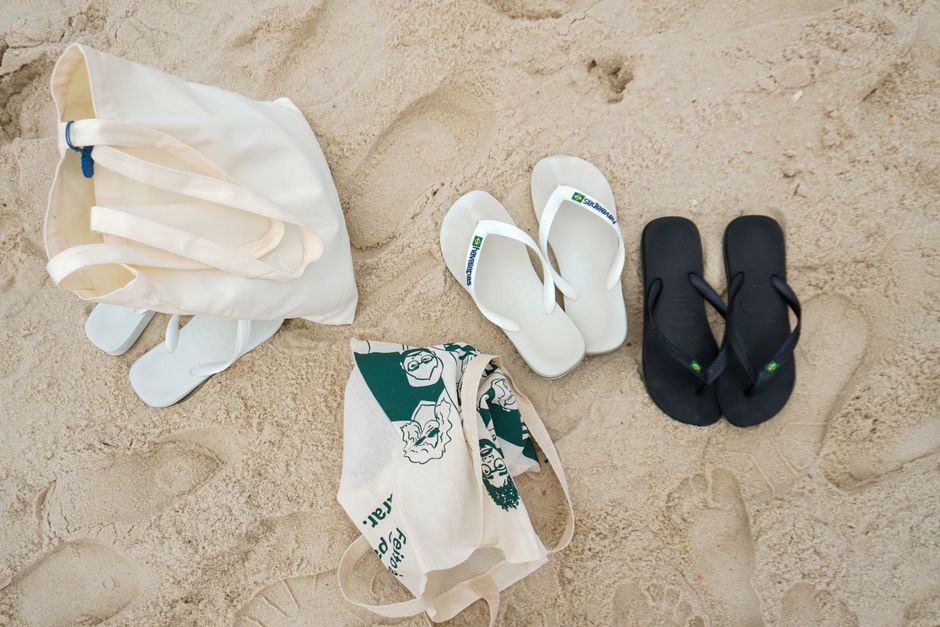
The 2026 Brasil Logo edition lands in four colourways built for the Australian market: mango, coral, electric blue, and palm green. The embossed Brazilian flag logo on the strap is the only seasonal update; the construction underneath is unchanged from the version that made Havaianas the top-selling flip-flop brand in Australia by volume for four consecutive years. That consistency is the point.
The competitive landscape at this price includes Rubi thongs from Cotton On Body at around A$15 and Volcom or Reef sandals starting at A$40 to A$60. Havaianas sits in the middle, but the natural rubber construction places it closer in performance to the A$40-plus tier than the A$15 synthetics. The question for 2026 is whether the Brasil Logo still earns that positioning, or whether the brand is coasting on institutional loyalty.
Price
The Havaianas Brasil Logo retails at A$29.99 across major Australian stockists.
At that price, it is worth it. The natural rubber construction outlasts comparable synthetic thongs from Rubi or unbranded beach retailers by a measurable margin: owners consistently report two to three seasons of regular beach and pool use before meaningful wear sets in, versus one season from synthetic alternatives at A$10 to A$15. The per-wear cost on a pair of Havaianas used across two summers is lower than it appears at checkout.
The closest real competitor at a similar price is the Reef Cushion Bounce Phantom at A$49.99, which adds a contoured footbed and more arch support. If you walk more than you stand still, the Reef is worth the extra A$20. If your typical summer involves beach, pool, and short walks between both, the Havaianas price point is the right call.
Materials and Construction
The Brasil Logo is 100% natural rubber throughout: upper strap, outsole, and footbed. The natural rubber is the product's structural advantage over synthetic alternatives. It is denser, more resistant to UV degradation, and holds its shape across repeated wet-dry cycles in a way that synthetic EVA or PVC compounds do not.
The footbed carries Havaianas' signature rice-grain texture, a raised pattern across the entire standing surface that provides grip when wet and a light massage-like sensation underfoot. The texture is functional, not decorative: owners consistently report that it prevents the foot from sliding forward on wet surfaces, which is the primary failure mode of flat-footbed thongs.
The strap is slim and unmoulded, which is consistent with the Brasil Logo's positioning as a minimal beach thong rather than a structured sandal. The thong post, which anchors the strap through the footbed, is the construction's known weak point. Long-term owners report that with heavy daily use, the post can pull through the footbed after one to two seasons. This is not a defect unique to the Brasil Logo; it is a structural limitation of the thong post design across the category. At A$29.99 with a two-season lifespan, it is an acceptable trade-off rather than a quality control failure.
The outsole is flat and smooth on the underside. It grips adequately on dry pavement and wet tile but offers no traction features for uneven surfaces. These are beach thongs; they are not designed for hiking or cobblestones.
Comfort
Out of the box, the Brasil Logo is comfortable on the footbed and mildly uncomfortable at the strap. The natural rubber strap has no padding or lining between the toes, and buyers consistently report blistering at the thong post contact point during the first few wears. This is a break-in issue common across the category and resolves within three to five wears as the rubber softens slightly at the point of contact.
The rice-grain footbed texture adds a functional comfort element that flat footbeds lack: the raised pattern keeps the foot slightly elevated from the surface, reducing heat transfer from hot pavement in direct sun. On a 35-degree Sydney arvo, that matters.
The arch support is flat. There is no contouring, no arch bridge, and no heel cup. For a short beach walk or poolside wear, this is irrelevant. For any walk exceeding 30 to 45 minutes on hard surfaces, the lack of support becomes a problem in the form of arch fatigue and heel soreness. Buyers with high arches or plantar fasciitis should not use the Brasil Logo as their primary walking shoe for summer days that involve significant pavement time.
The lightweight construction, estimated at under 200 grams per pair, means there is no foot fatigue from the shoe's own weight. The trade-off is that the minimal sole thickness, approximately 15mm at the heel, provides limited cushioning impact absorption compared to a structured sandal.
Fit and Sizing
The Brasil Logo uses Brazilian sizing, and first-time buyers consistently order the wrong size. Use the official Havaianas size guide before purchasing.
The practical rule: most Australian women's sizes sit one BR number above their standard AU size. An AU women's 8 corresponds to BR 39/40. When between sizes, size up rather than down; the natural rubber does not stretch, and a slightly longer footbed is more comfortable than one that cuts into the heel.
The women's and men's cuts differ in strap width, not footbed length. Women with narrower feet should buy the women's cut specifically; the narrower strap sits more comfortably across the toes and reduces the likelihood of blistering at the post. Buying men's sizing to get a larger footbed length while having a narrow foot will increase break-in discomfort and the risk of ongoing strap irritation.
Size down half a size if your foot tends to be wide and short, as the BR sizing can leave excess footbed length at the heel on compact feet.
How to Style It
Beach-to-café in coral or mango. Pair the coral or mango Brasil Logo with a linen pull-on short in off-white or natural and a cropped white linen shirt, buttons open over a ribbed bikini top. A woven straw tote completes the transition from sand to espresso without looking like you tried too hard. The vivid thong colour does the work; keep everything else neutral.
Resort pool day in electric blue. The electric blue colourway sits directly against a printed wrap skirt in a contrasting tropical print, worn over a one-piece swimsuit. Add a lightweight cotton oversized button-down in white or cream and a wide-brim sun hat. The blue thong anchors the palette without competing with a busy print.
Low-key summer errands in palm green. Palm green pairs cleanly with khaki linen wide-leg trousers and a fitted white singlet. The thong reads intentional rather than default here because the colour is specific enough to look chosen. A crossbody canvas bag keeps the outfit functional for a farmers market or weekend grocery run without over-styling what is, at its core, a A$29.99 beach thong.
Alternatives
Reef Cushion Bounce Phantom, A$49.99 (available at Surfstitch, The Iconic)
The Reef adds a contoured EVA midsole and a built-in arch bridge that the Havaianas lacks entirely. Buy this instead if you are on your feet for more than an hour at a stretch, or if you have any history of plantar fasciitis. The Reef costs A$20 more; the support difference justifies it for walkers.
Rubi Thongs by Cotton On, approximately A$15 (available at Cotton On stores and cottonon.com)
Rubi thongs are significantly cheaper but made from synthetic rubber that owners consistently report cracking or splitting within a single season of regular use. Buy these if you need a throwaway pair for one holiday or a specific event where loss or damage is likely. Do not buy them as a seasonal staple.
Crocs Classic Sandal, A$59.99 (available at Crocs.com.au, The Iconic, David Jones)
The Crocs Classic Sandal offers a fully moulded Croslite footbed with heel strap security that the Brasil Logo cannot match. It is wider, bulkier, and less packable, but substantially more supportive for full-day outdoor wear. Buy this instead if you want a summer sandal that functions on sightseeing days as well as beach days.
Pros
- The natural rubber construction outlasts synthetic alternatives by at least one full season, based on consistent owner reports across multiple summers of Australian beach use.
- The rice-grain textured footbed prevents foot slippage on wet surfaces, which flat-footbed thongs at this price point do not reliably achieve.
- At under an estimated 200 grams per pair, the Brasil Logo packs flat into a beach bag without adding meaningful weight or bulk to travel luggage.
- The rubber is fully waterproof and does not absorb salt water, chlorine, or sunscreen in a way that causes structural degradation, making it genuinely functional from beach entry to street-level wear without needing to dry first.
- The 2026 colourways, particularly mango and palm green, are calibrated for Australian summer palettes rather than generic global releases, and verified purchasers note they photograph well against beach and outdoor settings.
Cons
- The thong strap causes blistering between the toes during the break-in period, typically the first three to five wears, and buyers with sensitive skin or narrow feet are disproportionately affected.
- The footbed stains from sunscreen and tanning oil in a way that does not fully wash out; the rice-grain texture traps product residue, and owners report permanent discolouration after a single heavy beach day.
- The flat, uncontoured sole provides zero arch support, making the Brasil Logo unsuitable for any walking that extends beyond short distances between beach, pool, and café.
- The thong post pulls through the footbed after one to two seasons of heavy daily use, which is a structural limitation of the design that no amount of careful wear prevents.
- Brazilian sizing conversion causes a meaningful proportion of first-time Australian buyers to order incorrectly, and the return process adds friction to what should be a frictionless A$29.99 purchase.
- The smooth flat outsole performs poorly on wet grass, gravel, or any surface with texture variation; these are specifically beach-to-pavement thongs and fail outside that context.
Current Price
A$29.99
Available at Theiconic.com
Buy It Now →Price verified as of June 22, 2026. WYS may earn a commission on purchases.
The WYS Verdict
The Havaianas Brasil Logo is the right thong for Australian summers at the right price, provided your use case stays within its actual design parameters: beach, pool, short coastal walks, and travel. It is not a walking sandal, not an arch-support solution, and not a stain-resistant product. Within its lane, it is the most durable, most packable, and most reliably waterproof option available in Australia at A$29.99. Buyers who need more support should spend A$20 more on the Reef Cushion Bounce Phantom; buyers who need less should spend A$15 less on a Rubi and accept the shorter lifespan. Everyone else should buy the Havaianas, size up when in doubt, and budget three to five wears for the strap to soften.
Score: 7.8 out of 10
Frequently Asked Questions
Are the Havaianas Brasil Logo thongs worth A$29.99 in Australia?
Yes, at A$29.99 they earn their price through natural rubber durability that consistently outlasts synthetic alternatives by at least a full season. The per-wear cost across two summers of regular beach use is lower than it appears upfront. Score: 7.8 out of 10.
How should Australian women size the Havaianas Brasil Logo?
Use the official Havaianas BR size guide before ordering, not your standard AU size. Most Australian women's sizes correspond to one BR number higher (AU 8 women's equals approximately BR 39/40), and when between sizes, size up. Women with narrow feet should buy the women's cut specifically, as the narrower strap significantly reduces break-in discomfort at the thong post.
Will the thong strap cause blisters, and does it get better?
Owners consistently report blistering between the toes during the first three to five wears as the natural rubber strap stiffens at the post contact point. It resolves as the rubber softens with use. Wearing them for short periods initially, rather than a full beach day on the first wear, shortens the break-in discomfort period.
What is the best alternative to the Havaianas Brasil Logo if I need more support?
The Reef Cushion Bounce Phantom, available at The Iconic and Surfstitch for A$49.99, adds a contoured arch bridge and cushioned midsole that the Brasil Logo lacks entirely. Choose the Reef if your summer days involve more than 30 to 45 minutes of walking on hard surfaces, or if you have any history of arch or heel pain.